
Velvety Roasted Butternut Squash Soup with Caramelized Apples
Ingredients
Method
- Preheat your oven to 400 degrees F. Peel the butternut squash, remove the seeds, and cut it into 1 inch cubes. Core the apples and cut them into similar sized cubes. Chop the onion and mince the garlic. On a large rimmed baking sheet, toss the squash and apple cubes with 1 tablespoon of the olive oil, and season with a generous pinch of salt and pepper. Spread everything in a single layer.
- Roast in the preheated oven for 25 to 30 minutes, until the squash is tender when pierced with a fork and the apples are caramelized around the edges.
- While the vegetables roast, heat the remaining 1 tablespoon of olive oil in a large pot over medium heat. Add the chopped onion and cook for about 5 minutes, stirring occasionally, until soft and translucent. Add the minced garlic, ground cumin, and ground ginger, and cook for 1 minute more to toast the spices and bring out their flavor.
- Add the roasted squash and apples to the pot with the onion mixture. Pour in the vegetable broth and stir to combine. Bring the soup to a gentle simmer and let it cook for 10 to 15 minutes to meld all the flavors together.
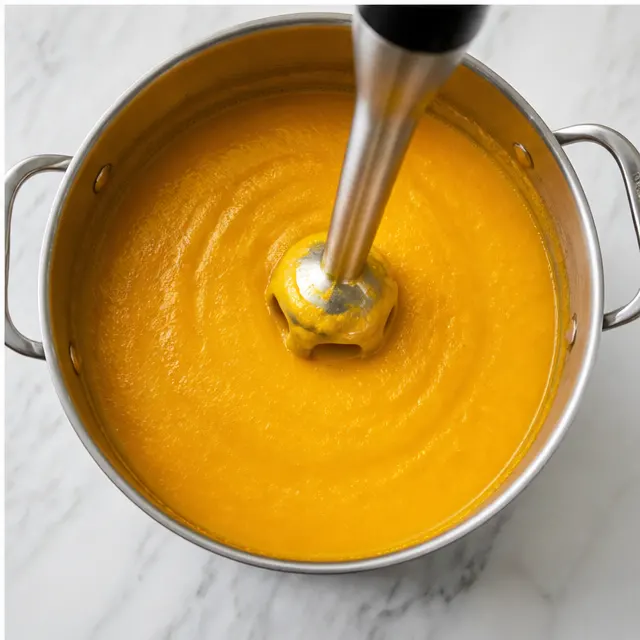
- Remove the pot from the heat. Use an immersion blender to puree the soup until smooth and silky. If you prefer a thinner soup, add a little extra broth or water. Taste and adjust the seasoning with more salt and pepper if needed.
- Ladle the soup into bowls and garnish with the chopped fresh parsley. Serve hot with warm crusty bread or your favorite sourdough, or refrigerate for later.
Nutrition
Notes
Tried this recipe?
Let us know how it was!Why This Roasted Butternut Squash Soup Works
I know it’s August. I know it’s hot. Trust me, I’m sweating in my kitchen in California right there with you. But this is the exact moment your future self would thank you for. Because the fall equinox is just a few weeks away, and butternut squash is already showing up at the farmers market, bright and early and ready to go.
Let me tell you a quick story. The first time I made butternut squash soup, I skipped the roasting step. I just boiled cubed squash in broth until it was soft, then blended it up. It was… fine. Fine is the enemy of memorable. The soup was pale, a little watery, and honestly, pretty forgettable. I served it and got the polite ‘oh, this is nice’ response, which, if you cook, you know is code for ‘what is this?’
Then I learned the secret. Roasting gives squash a tan. It concentrates the natural sugars, deepens the color, and adds a toasty, caramelized flavor you simply cannot stir in afterward. Suddenly, my creamy roasted butternut squash soup went from ‘nice’ to ‘gimme the recipe’ in a single batch. This recipe, with its caramelized apples and warm spices, is that version. It’s the one that fills your house with a smell that should be illegal in summer because it summons fall so hard.

How to Handle (and Roast) Your Squash
Let’s be honest, the hardest part of any butternut squash soup recipe is getting past the squash itself. That thing is a rock-hard gourd disguised as a kitchen bully. But we can take it down. Here’s the game plan.
First, you need to peel it. Your trusty vegetable peeler does the job, but if you want the easiest route, poke the whole squash a few times with a fork and microwave it for 2 to 3 minutes. This softens the skin slightly, making it a breeze to peel. Then cut off the ends, stand it upright, and slice it in half lengthwise. Scoop out the seeds and stringy bits with a large spoon. Easy.
Now, the roasting. Toss your 1-inch cubes with olive oil, salt, and pepper on a sheet pan. Spread them in a single layer and let them do their thing.
- Roast at 400°F for 25 to 30 minutes.
- Look for fork-tenderness at the thickest part of a cube.
- The edges should be caramelized to a deep amber, especially on the apple pieces.
- The smell is your cue: if it smells like a farmers market in October, you nailed it.
The apples are the secret weapon here. Roasting them alongside the squash intensifies their sweetness and adds a subtle fruitiness that makes this soup sing. Yes, you can skip the roasting step, but yes, the soup will just be fine. And fine is not why you’re here.
Don’t Fear the Gourd
If you buy pre-cut butternut squash from the store, I won’t judge. I do it when I’m in a rush. But you should know that whole squash is usually cheaper, and cutting it yourself isn’t that bad. Plus, it’s way more satisfying to conquer that thing with your own two hands. A stable cutting board and a sharp knife are non-negotiable. If your board slides, pop a damp paper towel underneath it.
How to Build the Flavor Base
While your squash and apples roast away, you get to work on the savory backbone of this soup. This is where the onion, garlic, and spices come in. Don’t skip this step. It’s only about 6 minutes of your active time, and it packs a serious punch.
Heat the remaining olive oil in a large pot over medium heat. Add your chopped onion and cook, stirring occasionally, until it’s soft and translucent. That takes about 5 minutes. You want it to smell sweet, not browned or burnt.
Then add the minced garlic, ground cumin, and ground ginger. Give it all a stir and let it cook for one minute more. This toasts the spices, which wakes them up. You’ll smell the cumin’s earthiness and the ginger’s warmth immediately. It’s a little ritual, and it’s the difference between a soup that tastes deep versus one that tastes flat.
- Toast the spices, don’t burn them. One minute is all you need.
- Use fresh garlic. Pre-minced in a jar is fine in a pinch, but fresh gives you that sharp, aromatic kick.
- Yellow onion is the best here. It’s mild and sweet, a better match for the squash than a sharp white or red onion.

Simmer Everything Together
Once the squash and apples come out of the oven, this is where it all comes together. Add the roasted cubes to the pot with your fragrant onion mixture, then pour in the vegetable broth. Stir it all up, and watch that gorgeous golden color combine.
Bring the pot to a gentle simmer, not a rolling boil. A gentle bubble is all you need. Let it go for 10 to 15 minutes so all the flavors can get to know each other. This is a crucial step. It’s not just about heating the soup through; it’s about letting the caramelized bits from the roasting blend with the toasted spices and sweet apples to create something cohesive.
The squash will start to break apart slightly as it simmers. That’s a good sign. It means your soup is well on its way to being smooth. If you’re short on time, you can shorten this step, but those extra minutes make a difference. Simple as that.

How to Blend Butternut Soup
Now, for the moment of truth: the blending. This is where a weeknight meal turns into something you’d be proud to serve at a dinner party. You have two options, and both work well. It all depends on what you’ve got in your kitchen drawers.
The easiest, most foolproof method is an immersion blender. You take the pot off the heat, stick the blender in, and puree away until it’s silky smooth. No transferring hot liquid, no waiting for it to cool down. It’s my go-to for this creamy roasted butternut squash soup because it’s all in one pot and the cleanup is a dream.
If you’re using a regular countertop blender, you need to be a bit more careful. Let the soup cool slightly, then blend in small batches. Always remove the center vent cap and hold a kitchen towel over the lid. This lets the steam escape and prevents a hot-soup explosion all over your ceiling.
I know, you’re thinking, ‘but blended soup is blended soup, right?’ Almost. A stand blender gives you a slightly silkier result than an immersion blender at the low end of the price range. But honestly, for this soup, the immersion blender gets you 95% of the way there, and it’s way less hassle. If you do use a stand blender, blend until the soup is completely smooth and homogenous. You’re aiming for a velvety, luxurious texture that coats the back of a spoon.

Troubleshooting Your Soup
Even the best recipes hit a snag now and then. Here are the most common problems I’ve run into over the years, and the quick fixes that save the batch.
- ❌ Mistake: Soup tastes flat and bland. ✅ Solution: It’s not you, it’s missing salt. But also, a tiny splash of something acidic, like a squeeze of lemon juice, wakes it up instantly. Taste, season, taste again.
- ❌ Mistake: Soup is too watery. ✅ Solution: Let it simmer longer, uncovered, to cook off some liquid. Or, be more generous with the broth next time and use less. The cubes should be just about covered.
- ❌ Mistake: Soup is too thick. ✅ Solution: This is an easy fix. Add a splash of extra broth or water while it’s on the stove, and stir to combine. You’re in control of the consistency.
- ❌ Mistake: The soup is stringy or grainy. ✅ Solution: This is usually an over-blending issue. Blend in short bursts and check the texture. A smooth, silky soup should never be overworked.
- ❌ Mistake: The garlic tastes burnt. ✅ Solution: You probably cooked it on too high heat. Keep the heat at medium and only cook the garlic for that quick minute with the spices. It should be fragrant, not browned.
Flavor Variations to Make It Yours
This base recipe is perfection, but it’s also a canvas. Once you’ve made it a time or two, feel free to riff. The recipe notes suggest you can swap the apples for pears in winter for a different kind of sweetness. That’s a fantastic change of pace.
You can also add a pinch of cinnamon or nutmeg along with the cumin and ginger for an extra cozy flavor. It’s a warm, classic addition that pairs beautifully with the caramelized squash.
- Curry Butternut Squash Soup: Add a teaspoon of curry powder with the other spices. The warmth of the curry plays perfectly with the sweet squash.
- Ginger-Forward: Add a small knob of freshly grated ginger in with the garlic. It’ll add a bright, zesty kick.
- Extra Creamy: If you don’t need it vegan, you can stir in a splash of canned coconut milk or heavy cream at the very end for a richer finish. It’s a delicious treat.
- Indian-Spiced: A quick stir of garam masala and a squeeze of lemon juice at the end takes the whole thing in a new direction.
The beauty of this roasted butternut squash soup is that it’s forgiving. You can’t really ruin it, you can only make it different. So taste, adjust, and make it your own.
Storage & Make-Ahead Tips
As I mentioned, it’s August, and you have zero time to be a hero on a random Tuesday in a hot kitchen. This is a batch-cooker’s dream. That’s why I’m obsessed with make-ahead meals like this one. It’s a freezer-friendly soup that solves about three future dinners in just one hour of work now.
For the fridge: cool the soup completely, then store it in an airtight container. It’ll keep for up to 4 to 5 days. For the freezer: pour it into freezer-safe containers or zip-top bags. Leave a little headroom at the top because the liquid expands as it freezes. Label them. Trust me, you will not remember what’s in that container in November.
The soup freezes beautifully for up to 3 months. When you’re ready to eat it, thaw it overnight in the fridge, then reheat gently on the stovetop over medium heat. You might need to add a splash of broth or water to bring back that silky texture. The consistency is always a bit thicker after sitting in the fridge.
Meal Prep Timeline
Roast the squash and apples a day ahead: Keep them in a covered container in the fridge until you’re ready to finish the soup. Then it’s just a 15-minute simmer and a blend, and dinner’s ready.
Serving Suggestions
The best part of making a soup this good? The toppings. Yes, basil is technically a great garnish and we use fresh parsley here, but don’t be afraid to go wild. It’s the final flourish that takes it from home-kitchen casual to restaurant-worthy.
- A swirl of something creamy: A drizzle of good olive oil or a dollop of plain yogurt adds richness and a beautiful finish.
- Crunch is key: Toasted pumpkin seeds, or pepitas, are an amazing topping. They give a nutty, savory crunch, while toasted almonds are also amazing.
- Fresh herbs: We call for finely chopped parsley, but chives, sage, or thyme also work beautifully.
- Croutons: Day-old sourdough cut into cubes, tossed with olive oil, and baked until golden. It’s the best way to use up stale bread.
- Crusty bread on the side: A warm slice of your favorite sourdough is simply non-negotiable for dipping.
Soup is a hug in a bowl, and this one is wearing a cozy sweater. Serve it in big mugs for a casual weeknight dinner or in shallow bowls for a fancier fall gathering. Either way, it’s going to disappear.

Frequently Asked Questions
The Bottom Line
There’s a reason this is the iconic roasted butternut squash soup people crave in fall. It’s the process. Roasting those cubes of squash and apple until they’re caramelized and nutty is what creates that deeply satisfying, complex broth. You’re not just making soup tonight. You’re building a flavor foundation for your future cozy nights in.
When you pull this creamy soup from the freezer in October, with the leaves turning and the air finally getting that crisp edge, you’ll be glad August you got ahead of the game. That’s the real trick here. You’re not just making dinner. You’re making future you a promise. A warm, velvety, deeply comforting one.
I’d love to see how yours turns out. If you make it, tag me or drop your version on Pinterest. I’m always collecting ideas, and I’m genuinely excited to see your cozy bowls. Let’s share the fall soup love over on Pinterest and get inspired together.
Source: Learn More About This Dish