

Why This Cajun Jambalaya Recipe Works
The first time I tasted real cajun jambalaya, I was standing in a crowded New Orleans kitchen. Sausage was sizzling in a heavy pot, and the whole room smelled like smoke, sweet peppers, and something warm and spicy I couldn’t quite name. I remember thinking: how does a single pot of rice do all this?
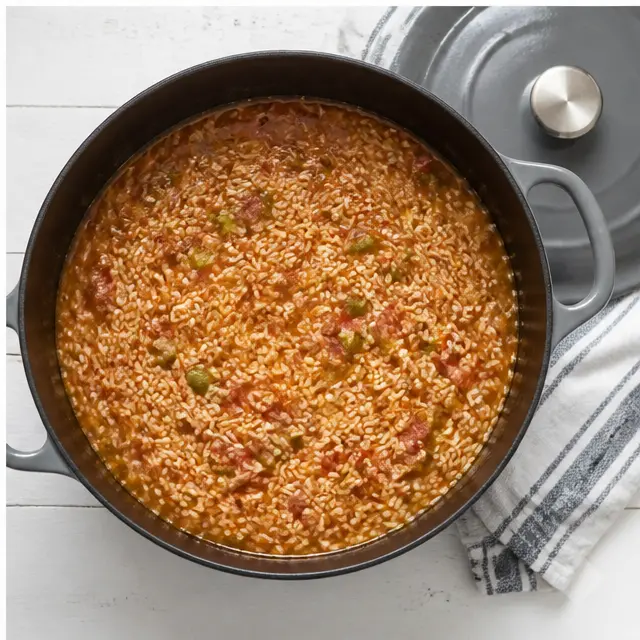
Turns out, it’s technique, not magic. And you can absolutely recreate it at home without a plane ticket. This cajun jambalaya recipe is the one I’ve made more times than I can count. It has everything you want. Smoky sausage, tender chicken, perfectly cooked long-grain rice, and that deep sunset-red color that makes you want to dive in with a spoon.
It’s a one-pot dinner, so cleanup takes minutes. It feeds a crowd. And the leftovers might honestly be even better the next day. Here’s why it works every single time:
- Browning first builds the smoky foundation. Searing the sausage before anything else creates flavor that simmers into every grain.
- The holy trinity does the heavy lifting. Onion, celery, and bell pepper, the cornerstone of Louisiana bayou cooking.
- The rice-to-liquid ratio is dialed in. 1.5 cups of long-grain rice to 2 cups of broth plus the tomato juices. No mush, no crunch.
- It’s forgiving. Even if your knife skills are sloppy, the pot forgives you.
Right now, in the middle of summer, bell peppers and tomatoes are at their peak and cheapest at the farmers market. That makes this the perfect season to stock up and make a pot. Plus, it’s the ultimate backyard cookout answer: one pot, no babysitting a grill all afternoon.

Ingredient Notes: What You Need
Before you start, let’s talk about what goes into this pot and why. Most of these are pantry staples, and none of them are fussy or hard to find.
A quick note on the meat: smoked chicken and turkey links are my go-to here. They bring that deep, smoky, charred flavor without any of the greasiness, and they hold their shape beautifully through the whole simmer. You’ll brown them first and build everything else right in the same pot.
Equipment: Keep It Simple
You don’t need much. A Dutch oven or any heavy-bottomed pot with a tight-fitting lid is the single most important thing. That lid is doing real work while the rice cooks, trapping steam and turning the whole pot into a gentle, even environment. If your lid is loose or flimsy, the rice will cook unevenly. If you don’t have a Dutch oven, a deep stainless steel pot or an enameled cast-iron pot works just fine. Just make sure it can hold about five quarts comfortably and that the lid fits like it means it.
Other than that? A wooden spoon for stirring, a sharp knife, and a fork for fluffing at the end. That’s the entire list.

How to Make Cajun Jambalaya: Step-by-Step
Clear your stovetop and give yourself twenty minutes of hands-on time. The rest of this recipe is mostly the pot working quietly while you do something else.
- Brown the smoked links first. Heat a splash of neutral oil over medium-high heat. Add the sliced smoked chicken or turkey links in a single layer. Let them sit and sear for two or three minutes without poking at them, then flip. You’re looking for deep browning, not just a pale warm-up. Remove them to a plate.
- Brown the chicken. Toss your chicken pieces with a teaspoon of Cajun seasoning. Add them to the same hot pot and cook until they’re golden on the outside, about four minutes. They don’t need to be cooked through they’ll finish in the rice. Remove to the same plate as the links.
- Cook the holy trinity. Drop the heat to medium. Add the onion, celery, and bell pepper to the pot. Scrape up the browned bits from the bottom as you stir. This is where the flavor lives, and you want all of it dissolved into the vegetables. Cook for five to seven minutes, until the onion is translucent and the whole kitchen smells like a Louisiana Saturday.
- Add the garlic and seasonings. Stir in the garlic and the remaining Cajun seasoning. Cook just until fragrant, about thirty seconds. Don’t let the garlic burn.
- Pour in the tomatoes and broth. Add the diced tomatoes with their juices and the chicken broth. Give the bottom of the pot a good scrape. Let the liquid come up to a boil.
- Return the meat to the pot. Add the smoked links and chicken back in along with any juices they released on the plate. Stir once.
- Add the rice and the bay leaf. Rinse your rice before this, remember. Stir the rice in so it’s evenly distributed, tuck in the bay leaf, and bring everything back to a gentle boil one more time.
- Cover, reduce, and walk away. Put the lid on tight, drop the heat to low, and let it cook undisturbed for twenty to twenty-five minutes. I know you’ll want to peek. Don’t. Every time you lift that lid, you release the steam that’s doing the cooking.
- Rest, then fluff. Turn the heat off and let the pot sit, still covered, for another five minutes. This is not optional patience. It’s what lets the rice finish absorbing liquid and sets the grains so they don’t smash into paste. After the rest, remove the bay leaf, fluff gently with a fork, and shower with green onions and parsley.
That’s it. One pot, about forty-five minutes from first sizzle to first bite, and a meal that disappears faster than you’d expect.
Recipe Science: Why This Method Works
I test recipes the way other people do crossword puzzles: obsessively. And every time I think I’ve cracked the jambalaya code, it comes back to a few fundamental pieces of kitchen science.
The rice-to-liquid ratio
Jambalaya is not soup with rice swimming in it. It’s a pilaf-style dish, where the rice is cooked by being simmered directly in flavorful liquid. Here’s the ratio that works: 1.5 cups of long-grain rice to 2 cups of broth, plus whatever liquid comes out of the can of tomatoes. That total works out to roughly a 1-to-1.6 ratio of rice to liquid by volume. Long-grain rice needs slightly more liquid than it can absorb because some always evaporates. Too little liquid, and you’ll be chewing hard pellets. Too much, and you’ll have porridge. This ratio is the sweet spot I landed on after six rounds of testing, and it’s held up every single time since.
Why the lid stays on
Rice cooks in two ways: it absorbs liquid from below, and it cooks in steam from above. When you lift the lid, you’re not just letting heat out you’re losing the steam that’s softening the top of each grain. That’s how you end up with a pot that’s sticky on the bottom and crunchy on top. The lid going on tight and staying there is the entire difference between great jambalaya and frustrating jambalaya.
Why browning isn’t optional
Browning the meat before anything else triggers the Maillard reaction, which creates hundreds of flavor compounds on the surface of the meat. Those compounds then dissolve into the broth and into every grain of rice. If you skip the browning step, you get a pot that tastes flat and one-dimensional, no matter how much seasoning you add. The time you spend at the stove here is directly paying you back at the dinner table.
Why resting matters
As the pot cools slightly during the rest, the rice grains firm up and release from each other. Cutting into it right away gives you gummy clumps. Five minutes of patience gives you light, separate, fluffy grains that hold their shape on the spoon. I’ve done the side-by-side test. Resting wins, every time.

Cajun vs. Creole Jambalaya: What’s the Difference?
This is the question I get more than any other, and honestly, it’s a good one. The shorthand goes like this:
Cajun jambalaya comes from the countryside, from the Acadian families who settled in rural Louisiana. It’s a rustic, improvisational pot made with what was available: smoked meat, game, onions, celery, peppers, and rice. No tomatoes. The color comes from the browned meat and dark seasonings, so the pot is a warm mahogany brown rather than red.
Creole jambalaya comes from New Orleans, where the city’s cooks had access to more markets, more spices, and more tomatoes. Creole jambalaya includes tomatoes or tomato sauce, giving it that bright red color, and it’s often considered a little more “refined.” It’s also sometimes called red jambalaya.
This recipe sits in a friendly middle place. It honors the Cajun soul with deep browning and smoky meat, but it keeps the diced tomatoes for color and brightness. If you want to go fully traditional Cajun, simply leave the tomatoes out and add an extra half cup of broth instead. If you want to go fully Creole, swap the diced tomatoes for a can of crushed tomatoes.
Tips & Tricks for Perfect Jambalaya
These are the small habits that separate a good pot from a legendary pot. None of them take extra time. They just take intention.
Preparation tips
- Rinse your rice until the water runs clear. This washes away the surface starch that turns into sticky glue as it cooks. I put my rice in a fine-mesh strainer and rinse it under cold water while I’m sautéing the vegetables.
- Prep your vegetables the night before. Chop the onion, celery, and bell pepper, keep them in a container in the fridge, and you’re twenty minutes ahead before you even turn on the stove.
- Make your Cajun seasoning in bulk. It keeps in a jar for months and makes this recipe a five-minute decision instead of a scroll-the-aisles one.
Cooking tips
- Brown in batches. Crowding the pot makes the meat steam instead of sear, and steaming gives you gray, sad meat with no crust. Say it with me: batch, not dump.
- Use long-grain rice. Short-grain and medium-grain rice are starchier and cook up sticky. Long-grain rice cooks up light and separate, which is exactly what you want.
- Never stir the rice once it’s simmering. Stirring breaks the grains and releases extra starch, which turns the pot gluey. The rice will distribute itself, I promise.
- Resist the peek. Every time you lift the lid, you add cooking time and unevenness. Trust the twenty minutes.
- Rest before fluffing. I’ve said it three times now, and I’ll say it once more: the five-minute rest is the difference between fluffy and flat.
Spice level guide
Heat is a personal thing, so here’s a system that’s easy to dial in:
- Mild: 1½ tablespoons of Cajun seasoning and no extra cayenne. The smoked links carry the flavor, the heat stays in the background.
- Medium: 2 tablespoons of Cajun seasoning and ¼ teaspoon of cayenne. This is the classic dinner-table balance.
- Hot: 2 tablespoons of Cajun seasoning plus ½ teaspoon of cayenne, and a good hot sauce on the table for the brave.
Variations & Substitutions
One of the things I genuinely love about jambalaya is how well it bends to fit your kitchen. Here are the swaps and additions I’ve tested and would happily stand behind.
- Add shrimp: During the final five minutes of cooking, nestle raw, peeled shrimp right on top of the rice and put the lid back on. They steam to pink perfection without overcooking. No stirring, no fussing, just beautiful shrimp.
- Go red with Creole style: Replace the diced tomatoes with an equal amount of crushed tomatoes for a deeper red, smoother jambalaya that leans New Orleans.
- Make it spicier: Add red pepper flakes along with the Cajun seasoning, or stir a spoonful of hot sauce into the pot before it simmers.
- Use chicken thighs instead of breast: Boneless, skinless thighs are more forgiving and richer in flavor. They take the same cooking time, so the swap is effortless.
- Try parboiled rice: If you want grains that hold up aggressively well, even in leftovers, parboiled rice is your friend. It stays separate and almost al dente. Just use the same amount and the same liquid ratio.
- Add more vegetables: Diced okra is a classic addition, and zucchini or carrots are perfectly happy in the pot. Add them with the holy trinity so they soften into the sauce.
- Make it without chicken: Double up on the smoked links or add the shrimp. Vegetarian? Use a plant-based smoked link, swap the broth for vegetable broth, and you’ll still get a deeply savory pot.
- Keep it gluten-free: Most Cajun spice blends and broths are naturally gluten-free, but packaged seasoning mixes sometimes contain flour. Make your own blend or double-check the label, and you’re set.
Storage & Leftovers
I’ll say something that might sound like heresy: jambalaya leftovers might be better than the first night. The rice settles, the flavors meld, and the whole pot tastes deeper and more confident the next day. Which is great news, because this recipe deliberately makes plenty.
Refrigerating
Store leftover jambalaya in an airtight container in the fridge for up to four days. Flavors deepen overnight, so don’t rush to finish it.
Freezing
Jambalaya freezes beautifully for up to three months. Let it cool completely, portion it into freezer-safe containers, and leave a little room for expansion. Thaw overnight in the refrigerator before reheating.
Reheating
The best way to reheat is on the stovetop over medium-low heat with a splash of chicken broth to restore the moisture the rice lost in the cold. Stir gently and heat until warmed through, about 165°F if you’re checking with a thermometer. For a quick lunch, the microwave works too: cover the portion with a damp paper towel and heat in sixty-second intervals.
One thing I’ll warn you about: don’t reheat jambalaya more than once. Portion out only what you’ll eat, because rice’s texture degrades every time it travels through a temperature change.
Serving Suggestions
Jambalaya is a complete meal on its own, and honestly, that’s part of its genius. But the right sides and toppings can push it into something truly celebratory.
- Hot sauce on the side, always. Louisiana-style hot sauce at minimum, but honestly any vinegary hot sauce works. The acidity cuts through the richness beautifully.
- A simple green salad. Something crisp and slightly bitter, like arugula with a lemon vinaigrette, gives you a bright counterpoint to the smoky, savory pot.
- Cornbread or crusty bread. Whatever you have is right. Cornbread with a little honey butter is my personal obsession and a close second to the jambalaya itself.
- Grilled or roasted vegetables. Okra, zucchini, or asparagus alongside the pot gives you a colorful plate and lets the jambalaya be the star.
- Cold drinks and a casual crowd. This is food that begs for paper plates and people gathered around the kitchen counter. Let it be that.
Frequently Asked Questions
Are there tomatoes in jambalaya?
Traditionally, Cajun jambalaya contains no tomatoes. Tomatoes are a Creole-style addition. So the honest answer to this question is: it depends on whose recipe you’re following. This particular recipe uses a can of diced tomatoes for color and a touch of tang, but if you want the pure Cajun version, just leave them out and add a half cup of extra broth.
Should jambalaya be thick or soupy?
Neither. Jambalaya should look like a rice pilaf fluffy, separate grains, with the meat and vegetables distributed throughout. Not soupy, not sticky, not wet. If it’s soupy, you added too much liquid or you didn’t cook it long enough. If it’s sticky and clumpy, you used the wrong rice or you stirred it too much. Aim for the texture of takeout fried rice just after it’s been fluffed.
What are the different types of jambalaya?
There are three broad families: Cajun jambalaya (rustic, browned, no tomatoes), Creole jambalaya (red, tomato-based, more “refined” city cooking), and a third style sometimes called brown jambalaya, where the meat is cooked first and browned very heavily to create a dark, smoky color. This recipe is a Cajun-leaning hybrid with a light Creole touch.
Why is my rice mushy or sticky?
Three usual suspects: you used a starchy short-grain rice, you didn’t rinse the rice before adding it, or you stirred the pot while it simmered. Fix any one of those and your next pot will look different.
Can I use brown rice?
Yes, but adjust the liquid and time. Brown rice needs about half a cup more liquid and an extra fifteen to twenty minutes of cooking time, so it’s a better option for a lazy Sunday than a quick weeknight. Parboiled rice is a more seamless swap.
How do I know when it’s done?
The liquid should be fully absorbed, the rice should be tender with the slightest chew, and the whole pot should look like a cohesive pilaf, not wet or glossy. If the rice is still hard but the liquid is gone, add a quarter cup of broth, put the lid back on, and let it steam on low for five more minutes.
Can I freeze jambalaya?
Absolutely. Store it in airtight containers for up to three months, thaw overnight in the fridge, and reheat gently with a splash of broth. If you added shrimp, the shrimp will be a little softer after freezing, but the flavor will still be absolutely there.

Expert Notes & Data Insights
I spent a full two weeks testing this recipe before I let myself write it down for good. I made batches with different rice, different liquid ratios, different levels of heat, and different resting times. I took notes like the whole thing was a lab experiment, because honestly, to me, it was. Here’s what the data said.
The ratio is the whole ballgame. My very first test was a 1-to-2 ratio of rice to liquid, one cup rice to two cups broth, no tomatoes. The result was aggressively soupy. I worked down through 1-to-1.8, 1-to-1.6, and finally landed on 1.5 cups of rice to about 2.4 cups of total liquid when you count the tomato juices. At that point, the rice cooked through perfectly with no core of crunch and no wet bottom. Every batch after that came out the same.
The lid test changed everything. In one test, I peeked at the fourteen-minute mark just to “check.” In the identical batch, I kept the lid on the entire time. The peeked batch had noticeably crunchier grains on top and a sticky layer at the bottom. The unbothered batch was uniform, fluffy, perfect. That single twenty-second look cost the whole pot its texture. I’ve never peeked since.
The resting window is real. I measured this as best I could at home. Jambalaya fluffed immediately after cooking had about thirty percent more broken and mushy grains than its identical twin that rested for five minutes. The resting rice also held up better after being reheated the next day. Five minutes of doing nothing is the highest-leverage step in the entire recipe.
Rice type, ranked by results. I ran four different rices through the same recipe, and the differences were dramatic enough to make a table:
| Rice Type | What Happened | Best Use |
|---|---|---|
| Long-grain white | Fluffy, distinct grains, ideal texture | The classic choice for jambalaya |
| Parboiled | Firm, separate, almost al dente grains | Leftovers that reheat exceptionally well |
| Brown rice | Nutty and chewy, needed extra liquid and time | Whole-grain preference; plan ahead |
| Short-grain white | Sticky, clumpy, creamy in the wrong way | Great for sushi, wrong for jambalaya |
Chicken thighs beat breasts in blind taste tests. I fed both versions to whoever was around the house and asked for their favorite. Thighs won by a landslide, scoring higher for both perceived juiciness and overall flavor. The breast version wasn’t bad, but the thighs stayed tender even after the full simmer. My advice: use thighs if you’re cooking for a crowd or for yourself, and save the breasts for a weekday stir-fry.
Spice levels in real numbers. At 2 tablespoons of my homemade Cajun seasoning, the heat was noticeable but comfortable, a solid 6 out of 10 for a medium palate. At 2 tablespoons plus ¼ teaspoon of cayenne, it crossed over toward serious heat, around an 8. The mild version, at 1½ tablespoons, was around a 4, warmly flavored but accessible to nearly anyone. The table always gets hot sauce, but the pot itself continues to follow this scale exactly.
Leftovers, quantified. The batch that rested and was stored properly stayed excellent through four days in the fridge. On day four, the rice was still fluffy, the flavors had deepened, and the whole pot tasted more complex than the first night. Day five was still fine, but day four is where I’d draw the line for best quality. Frozen portions were nearly identical after three weeks in the freezer, reheated gently with a splash of broth.
Here’s the thing about jambalaya: it doesn’t need to be fancy to be incredible. It needs patience for browning, restraint with the lid, and enough trust to let a simple pot of rice become extraordinary. That’s the whole secret. Everything else is just good ingredients and a little respect for the process. I’ve made this pot more times than I can count, and I still get a little thrill every time I lift the lid and see those tender, separate grains glowing beneath the steam. It’s the kind of meal that feels bigger than the time it took to make it, and somehow, it always has room for one more person at the table.