
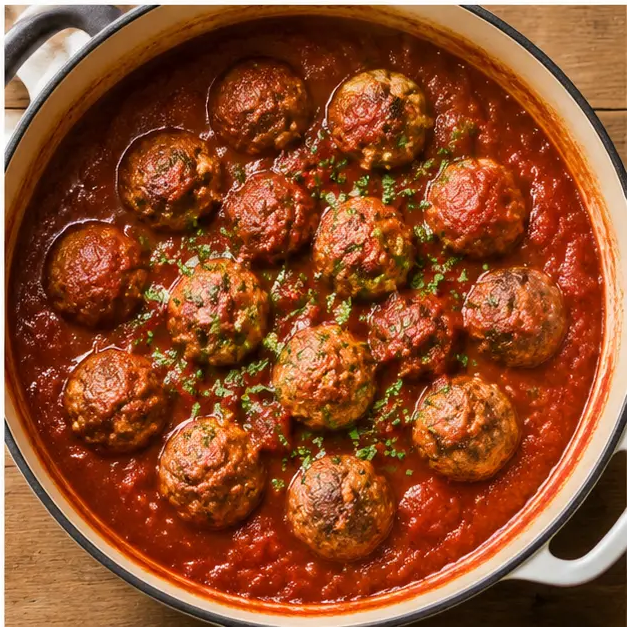
Classic Homemade Meatballs
Ingredients
Method
- Combine all the ingredients in a roomy mixing bowl. Use clean hands or a sturdy spatula to mix until just combined. Do not overmix or the meatballs will become tough and dry, but make sure the mixture holds together when pressed.
- Roll the mixture into 1 1/2-inch balls, using about 1 tablespoon of the mixture for each. A cookie scoop makes portioning quick and even. Place the balls on a lightly oiled plate or a parchment-lined baking sheet.
- For the stovetop method: Heat 1 tablespoon of olive oil in a large skillet over medium-high heat. Add the meatballs in a single layer, cooking in batches if needed, and brown on all sides. Continue cooking until they are cooked through, about 10 to 12 minutes.
- For the oven method: Preheat the oven to 400°F (200°C). Arrange the meatballs on a lined baking sheet and bake for 20 to 25 minutes, or until cooked all the way through.
Nutrition
Notes
Tried this recipe?
Let us know how it was!
Why You’ll Love These Homemade Meatballs
The fall equinox is a few weeks out, but this week’s cool snap is already whispering one thing: it’s meatball season again. Up here in Portland, the harbor has gone that steel-gray color, and my kitchen keeps pulling me toward the stove. A plate of homemade meatballs fixes just about everything on a cool Tuesday night.
I kept at it, though. Something about a good meatball is worth the work the way it drinks up sauce, the way it disappears from the platter before everyone’s even sat down. These meatballs are the ones I make when I want it done right the first time, and they’ve earned a permanent spot in my weeknight rotation.
Here’s why you’ll keep coming back to them:
- They’re genuinely easy. No special techniques, no fussy equipment, no culinary degree required.
- They’re juicy, not dry. The breadcrumb-and-egg panade locks in moisture, so you never get that sad, crumbly texture.
- They come together fast. About 30 minutes from mixing bowl to plate.
- They’re freezer-friendly. Make a double batch and you’ve got dinner waiting in the wings.
- They play well with others. Spaghetti, subs, soup, appetizers, grain bowls they’ll do just about anything.
- They beat anything frozen. Once you’ve had homemade, there’s no going back to the bagged stuff.

Ingredients That Pull Their Weight
This list is refreshingly normal. Nothing here requires a special trip to the store, and you probably have most of it in your kitchen right now.
- Ground beef: I reach for 80/20. The fat keeps the meatballs tender and juicy. If you’re using a leaner blend, add a little olive oil and keep a close eye on the bake time lean beef dries out faster.
- Breadcrumbs: Plain, Italian-seasoned, garlic-and-herb, or homemade they all work beautifully. Crushed crackers are a great stand-in. (More on that in the substitutions section below.)
- Egg and milk: The dynamic duo that binds everything together and keeps things tender. The milk can be swapped for broth, plant-based milk, or even a splash of red sauce.
- Garlic and onion: Fresh is ideal, but garlic powder and onion powder absolutely work in a pinch.
- Parmesan: A little salty, a lot savory, and completely optional if you’re out.
How to Make Baked Meatballs
The full recipe with measurements is in the card at the top of this post. Here’s the technique in a nutshell:
- Whisk the egg, milk, and seasonings together in a large bowl.
- Add the ground beef and breadcrumbs.
- Mix gently and I mean gently just until everything is combined.
- Let the mixture rest for five minutes. This matters more than you’d think.
- Scoop into even balls with a medium cookie scoop.
- Bake at 400°F for about 14 minutes, flipping halfway through.
That rest in step 4 is the trick I wish someone had taught me years ago. It gives the breadcrumbs time to hydrate and act like glue, which means the meatballs hold their shape beautifully and stay tender through the bake.

Tips & Tricks That Actually Matter
These are the small things I’ve learned the hard way usually by making the mistake first.
Use a Cookie Scoop
A standard medium cookie scoop (about 1.5 tablespoons) gives you even, ping-pong-sized meatballs that cook at the same rate. Hand-rolling works, but the scoop is faster and more consistent. For appetizers, go smaller; for hearty dinner meatballs, go bigger and adjust the bake time.
Don’t Overmix
I’ll say it again because it’s the most common mistake: overmixing tightens protein bonds and turns meatballs dense and tough. Mix until just combined, then walk away.
Line the Sheet Pan
Parchment paper means the meatballs release cleanly and hold their shape when you flip them. No sticking, no crumbling, no scrubbing pans.
Flip Halfway Through
Give the meatballs a turn at the seven-minute mark so the bottoms don’t burn. Takes thirty seconds and makes a real difference.
If the Mixture Feels Dry
Add a tablespoon of milk, maybe two. The mixture should be moist but still hold its shape when scooped.
For Lean Poultry
If you’re using ground turkey or chicken, add a tablespoon of olive oil and pull them from the oven a touch early. Poultry has less fat to spare.
The Science Behind a Tender Meatball
Let’s geek out for a minute, because understanding the why makes you a better cook.
The panade. Breadcrumbs and egg form what’s called a panade essentially a starchy paste. During cooking, the starches bind with liquid and swell, locking in juices and preventing the meat proteins from contracting too much. That’s why a panade is the secret to both tender and non-shrinking meatballs. Skip it, and you get dry, dense, shrunken discs.
Browning. Baking at high heat browns the surface of the meatballs, creating hundreds of new flavor compounds. This is the same magic behind a great sear, and it’s exactly why baked meatballs taste more complex than boiled.
Simmering in sauce. Drop the baked meatballs into simmering marinara and the gentle heat works to break down connective tissue in the beef. The meatballs soak up flavor while they hang out. Just keep it at a gentle simmer, not a rolling boil.
Alcohol-Free Variation
This recipe can easily be made without alcohol. Here are the substitutions I recommend:
- Rum → pineapple juice + 1/2 tsp almond extract. For tropical sweetness
These swaps maintain the depth of flavor while keeping the dish completely alcohol-free. Perfect for family-friendly meals or personal preference.
Variations & Substitutions
This recipe is a starting point, not a straitjacket. Here’s how to make it yours:
- Classic Italian: Add 1–2 teaspoons Italian seasoning, or use basil and oregano separately.
- Spicy: A pinch of crushed red pepper flakes or a dash of cayenne in the mix.
- Swedish-style: Swap the seasonings for a pinch of nutmeg and allspice, and serve with a creamy, savory sauce.
- Gluten-free: Use gluten-free breadcrumbs, oatmeal, rice, or crushed gluten-free crackers. Homemade breadcrumbs from gluten-free bread work great too.
- Egg-free: Use a flax egg 1 tablespoon ground flaxseed whisked with 3 tablespoons water. Let it sit for a few minutes before adding it to the mix.
- Dairy-free: Swap the milk for plant-based milk, broth, or a splash of red sauce.
- Breadcrumb swaps: Crushed crackers, panko, or homemade toasted breadcrumbs from a stale loaf all work. If you have garlic-and-herb breadcrumbs, use them they add flavor, but plain is perfectly fine.
- Savory boost: Add 1–1½ teaspoons Worcestershire sauce for a richer, deeper flavor.
- Different liquid: Whole milk is classic, but 2%, heavy cream, plant-based milk, broth, or even red sauce will all do the job. Each one changes the richness just a little.

Storage & Make-Ahead Guide
These meatballs are meal-prep gold, and there are a few ways to play it.
Refrigerator
Cooked meatballs keep in an airtight container in the fridge for 3–5 days. Reheat on a baking sheet at 350°F for 10–15 minutes, in a skillet over medium-low, or in the microwave for a couple of minutes.
Freezer (Cooked)
Cool the meatballs completely this step is non-negotiable. Freezing warm meatballs traps steam, which turns into ice crystals and ruins the texture. Once cool, drop them straight into a labeled freezer bag. Pre-baked meatballs won’t stick together, so no flash-freezing needed. They’ll keep for 2–3 months.
Freezer (Raw)
Raw meatballs should be flash-frozen on a sheet pan first, then transferred to a labeled freezer bag. They’ll keep for about 1 month and can be baked straight from frozen just add a few minutes to the cook time.
Make Ahead
You can make the meatballs up to 3 days ahead. Cool them completely, store airtight, and reheat before serving. The flavor actually gets better after a day in the fridge.
Serving Suggestions
The classic is spaghetti and meatballs with a generous ladle of marinara, and I’ll never say no to that. But don’t stop there:
- Meatball subs: Toasted hoagie roll, mozzarella, marinara, broiled until bubbly. Dinner sorted.
- Appetizer platter: Toothpicks and a bowl of your favorite dipping sauce marinara, garlic butter, or spicy peanut sauce.
- Meatball soup: Drop a few into a broth-based soup for a hearty twist. So good on a cold Portland night.
- Grain bowls: Over rice with roasted vegetables and a drizzle of sauce.
- Pizza topping: Sliced meatballs on a white pizza? Yes, please.
- Classic comfort: Serve with brown gravy and mashed potatoes for maximum coziness.
- Hawaiian-style: Toss with pineapple and sweet chili sauce in the slow cooker for an easy party appetizer.
Cooking Methods Compared
Baking is my default because it’s hands-off and even. Here’s how the other options stack up:
- Oven-bake (400°F, ~14 minutes): Hands-off, even cooking, easy cleanup. My go-to.
- Pan-fry: Gives you a beautiful crust, but it takes more active time and attention. Worth it if you want that crispy exterior.
- Broil-then-simmer: Broil to brown the surface first, then transfer to simmering sauce. The broil prevents soggy meatballs, and the simmer tenderizes and builds flavor.
- Slow cooker: Add sauce and meatballs to a 6-quart slow cooker. Cook 3 hours on high or 6 hours on low. If starting from raw, browning first gives better flavor and texture.
Troubleshooting
Something went sideways? Here’s how to fix it next time.
Dry, Tough Meatballs
Almost always overmixing or overcooking. Mix just until combined, and don’t overbake especially if the meatballs are going to simmer in sauce afterward. Pull them a touch early and let the sauce finish the job.
Meatballs Falling Apart
The panade is your glue. Make sure you’re using enough breadcrumbs and that the mixture rests for five minutes before shaping. Handle the balls gently when forming them, and use parchment paper on the sheet pan so they release cleanly.
Burnt or Uneven Bottoms
Flip halfway through the bake, and don’t skip the parchment paper.
Meatballs Shrinking
That’s a missing-panade problem. Without breadcrumbs to hold moisture, the meat proteins contract and squeeze out water. Trust the breadcrumbs they’re doing important work.
Bland Meatballs
Season generously, and try adding a little Worcestershire or a pinch more Parmesan. Ingredients rich in glutamates onions, garlic, tomatoes boost that savory flavor.
Doneness Guide
You’re looking for a nicely browned exterior and no pink in the center. If you use an instant-read thermometer, ground beef is safe at 160°F. But if the meatballs are going to simmer in sauce afterward, pull them around 150–155°F they’ll finish cooking in the sauce without turning dry. For ground turkey or chicken, aim for 165°F.
Meatball sizes: For appetizers, use a smaller scoop (about 1 tablespoon) and reduce the bake time. For spaghetti and subs, a medium scoop (1.5 tablespoons) gives that perfect ping-pong size. For big Italian-American dinner meatballs, go large and increase the bake time to about 20 minutes.
FAQ
What is the secret to tender meatballs?
The panade breadcrumbs plus egg and usually a little milk. The starches in the bread bind with the liquid and swell, which locks in juices and prevents the meat proteins from contracting too much. It’s the single most important thing in this recipe.
Can I use ground turkey or chicken?
Yes. Add a tablespoon of olive oil to the mixture and don’t overbake. Poultry is leaner than beef, so it dries out faster.
Can I make these without eggs?
Absolutely. Use a flax egg: 1 tablespoon ground flaxseed mixed with 3 tablespoons water. Let it sit for a few minutes before adding it to the mix.
Can I use panko instead of breadcrumbs?
You can. Panko is coarser, so the texture will be a little different, but it works in a pinch. Crushed crackers and homemade toasted breadcrumbs work well too.
Can I cook meatballs in a slow cooker?
Yes. Add sauce and meatballs to a 6-quart slow cooker. Cook 3 hours on high or 6 hours on low. If you’re starting with raw meatballs, browning them first will improve both flavor and texture.
Do I need to brown meatballs before putting them in sauce?
Not if you bake them first the oven does the browning for you. If you’re going straight into a slow cooker from raw, browning first is worth the extra few minutes.
Can I freeze meatballs in sauce?
Yes. Cool completely, then freeze in an airtight container with the sauce. Thaw in the refrigerator overnight and reheat gently on the stove or in the oven.
How many meatballs does one pound of beef make?
About 16–20, depending on size. A medium cookie scoop will give you roughly 18 meatballs per pound.
Can I bake these meatballs instead of frying?
That’s exactly what this recipe does. Baking at 400°F for about 14 minutes is the most hands-off, consistent method I’ve found.
Why did my meatballs fall apart?
Usually one of two things: not enough breadcrumbs (or no rest time for them to hydrate), or rough handling when shaping. Let the mixture rest before scooping, and handle the balls gently.

Expert Notes & Data Insights
After testing this recipe more times than I care to count and trust me, there were some rough batches in there a few truths stood out.
First, the panade is non-negotiable. Every batch that disappointed was a batch where I skimped on breadcrumbs or rushed the mixing. The science is clear: those starches are what keep the meatballs tender and stop them from shrinking into sad little marbles. It’s not trendy or glamorous, but it works, batch after batch.
Second, baking beats pan-frying for consistency. The oven’s even heat gives you uniform browning without the constant attention that frying demands. In my testing, baked meatballs came out juicier more consistently than fried ones and they freed me up to finish the sauce and boil the pasta at the same time.
Third, the five-minute rest before shaping is the cheap trick that delivers outsized results. It’s the difference between meatballs that hold together and meatballs that crumble into the sauce. It costs nothing but a little patience.
And finally the most important data point of all these meatballs disappear. Every single time I’ve served them, the platter comes back empty. My uncle Wally might have fed that first batch to the gulls, but these? He’d have reached for a second helping.
I hope these homemade meatballs become as loved in your kitchen as they are in mine. Make a double batch, freeze half, and you’ll always have a good dinner within reach even on the coldest, grayest Tuesday night.