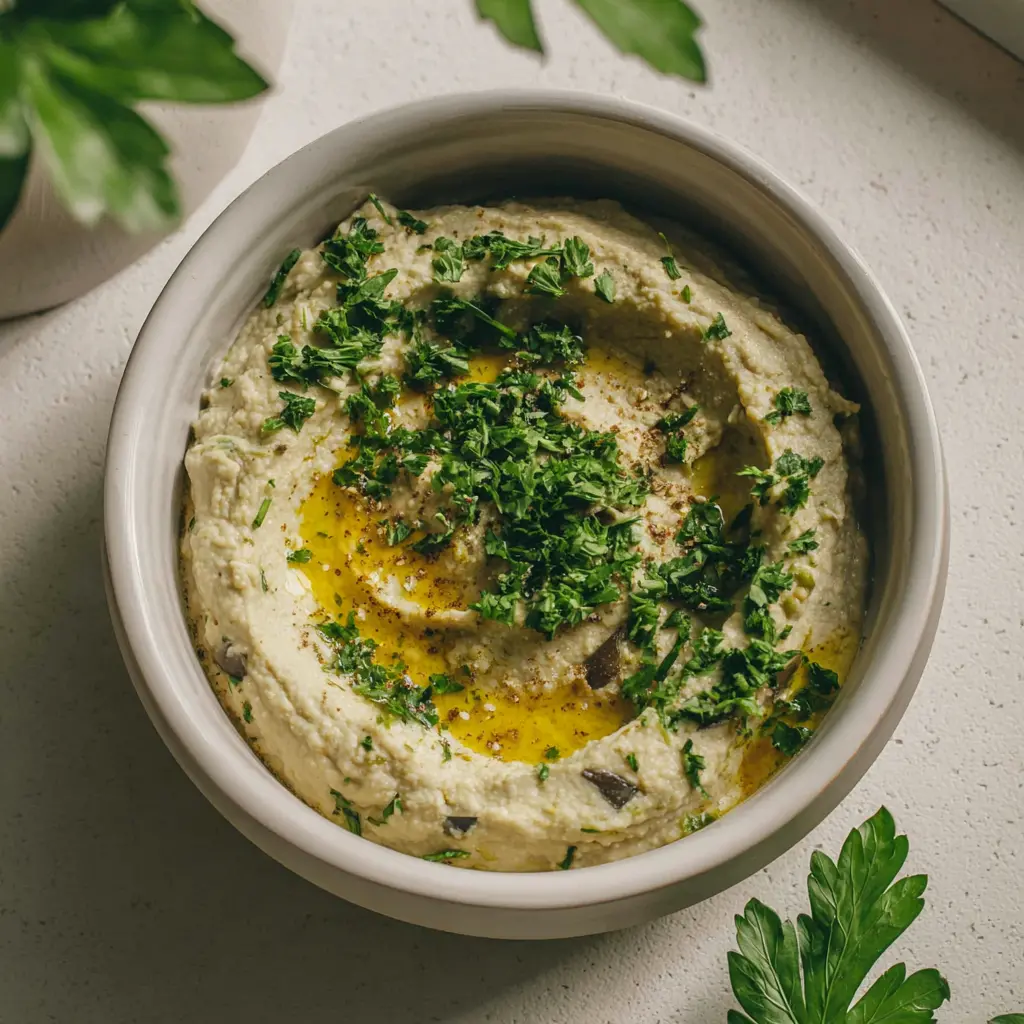
Greek Roasted Eggplant Dip Melitzanosalata with California Olive Oil
Ingredients
Method
- Preheat your oven to 350°F. Line a baking sheet with parchment paper or foil.
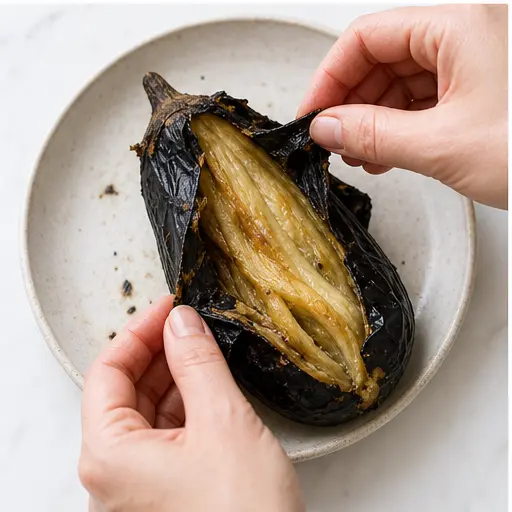
- Place the whole eggplants on the prepared baking sheet and roast for 60 minutes, until the skin is wrinkled and the flesh is very soft.
- Remove the eggplants from the oven and let them cool on the baking sheet for 30 minutes.
- Gently peel off the charred skin and transfer the eggplant flesh to a colander set over a bowl. Let it drain for 30 minutes to remove excess moisture.
- In a food processor, combine the drained eggplant flesh, garlic, breadcrumbs, olive oil, red wine vinegar, a pinch of salt, a pinch of pepper, and the parsley. Pulse until smooth and well blended.
- Taste and adjust seasoning with more salt, pepper, or vinegar if desired. Serve immediately or refrigerate for a few hours to let the flavors meld.
Nutrition
Notes
Tried this recipe?
Let us know how it was!What is Melitzanosalata?
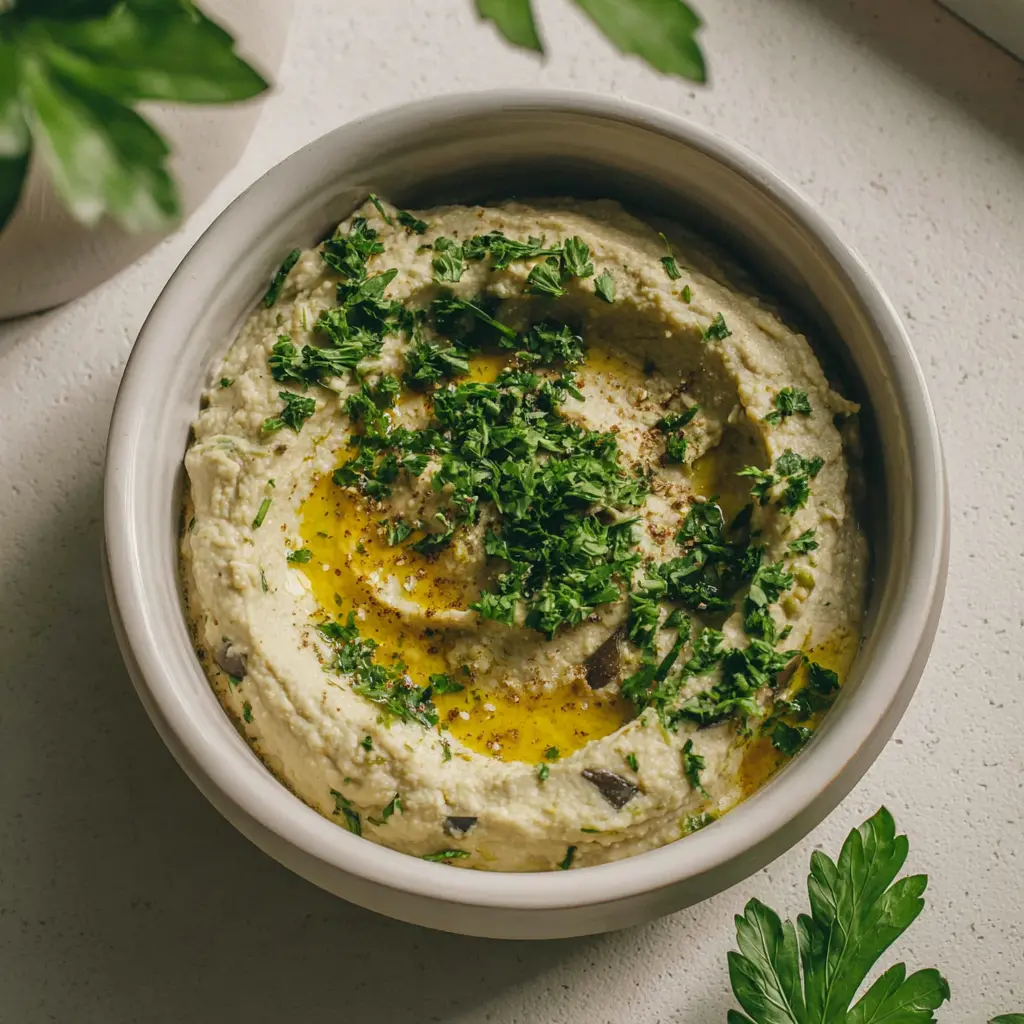
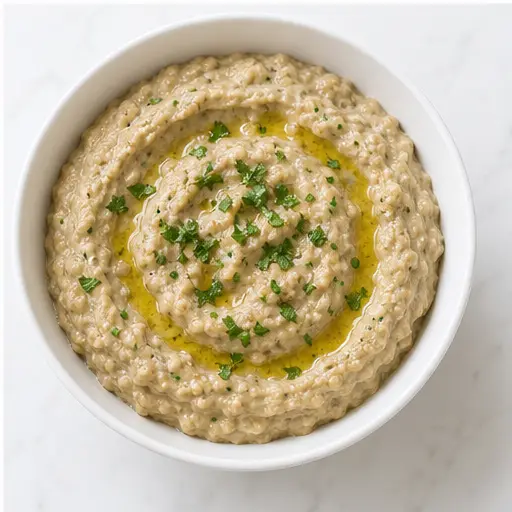
Let me take you back for a second. I was sitting at a tiny taverna on a sun-bleached Greek island, the Aegean Sea glittering just a few tables away. The waiter brought out a spread of little bowls olives, tzatziki, some feta and then he set down this one. It was pale, almost beige, with a swirl of olive oil on top and a scattering of fresh parsley. I scooped some up with a piece of warm pita, and honestly? I stopped mid-conversation. It was smoky, creamy, a little tangy, and so deeply satisfying. That was my first taste of greek roasted eggplant dip melitzanosalata.
Melitzanosalata (pronounced meh-lit-zah-no-sah-LAH-tah) is the Greek version of a classic roasted eggplant dip. It’s a staple on any Greek meze recipe spread, right up there with tzatziki and taramasalata. The name itself tells you what’s in it: “melitzana” means eggplant, and “salata” means salad. So it’s literally an eggplant salad, but we eat it as a dip. And it’s one of those dishes that proves simple ingredients, treated right, can be absolutely magical.
This isn’t the heavy, tahini-laden baba ganoush you might know from Middle Eastern restaurants. Authentic Greek eggplant spread is lighter, brighter, and lets the eggplant itself shine. The smoky flavor comes from roasting the whole eggplant until the skin is charred and the inside is silky soft. Then you mix it with good olive oil, a bit of garlic, red wine vinegar, and parsley. That’s it. But the result is so much more than the sum of its parts.
Why You’ll Love This Recipe
I’ve made a lot of eggplant dips over the years. Some were watery disasters. Some were bland. Some were… well, let’s just say they didn’t taste like that taverna memory. But this melitzanosalata recipe? It’s the one I come back to every single time. Here’s why I think you’ll love it too.
- Smoky flavor without a grill. You don’t need a backyard barbecue or a charcoal fire. The oven does all the work, giving you that deep, charred taste that makes this dip so addictive. It’s the perfect smoky eggplant dip without grill for apartment dwellers or anyone who doesn’t want to fire up the coals.
- It’s naturally vegan and gluten-free. This dip is a vegan appetizer summer dream. No dairy, no eggs, and it’s a gluten free dip as long as you use gluten-free breadcrumbs (or skip them entirely). Perfect for summer gatherings where everyone has different dietary needs.
- Make-ahead magic. This is one of those dips that actually gets better after a day in the fridge. The flavors meld together, the garlic mellows out, and it becomes even more delicious. It’s the ultimate make ahead appetizer for stress-free entertaining.
- Healthy and satisfying. Eggplants are low in calories and high in fiber. This dip is packed with healthy Greek dip ingredients: heart-healthy olive oil, fresh parsley, and garlic. You can feel good about serving it.
Ingredients You’ll Need
Let’s talk about what goes into this best eggplant dip recipe. The ingredient list is short, so each one matters. Don’t skimp on quality here.
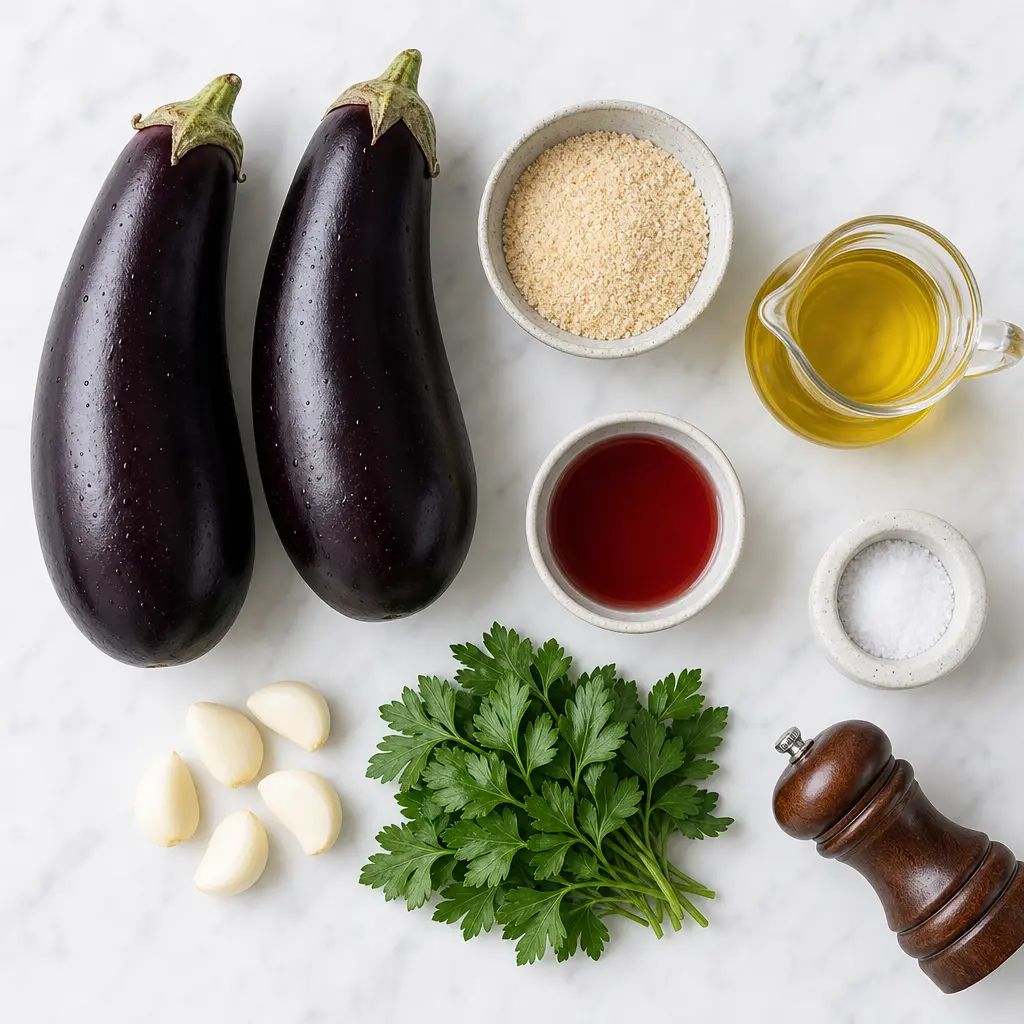
- Eggplants: You need 2 large eggplants, about 1½ pounds total. Look for ones that are firm, shiny, and feel heavy for their size. The big globe eggplants you find at any supermarket work perfectly. Don’t use the long, thin Japanese or Italian varieties here you want the fleshier ones for that creamy texture.
- Garlic: 5 cloves, peeled. Yes, five. But don’t worry roasting the eggplant doesn’t cook the garlic, so it stays a bit punchy. If you’re sensitive to raw garlic, you can reduce it to 3 cloves. I’ve done that plenty of times when I knew the dip would sit in the fridge for a day or two (raw garlic gets stronger over time).
- Breadcrumbs: 1½ tablespoons of plain or panko breadcrumbs. This is a classic Greek trick. The breadcrumbs help absorb any excess moisture from the eggplant and give the dip a slightly thicker, more cohesive texture. They don’t make it bready or heavy, I promise. Just a little structure.
- Extra virgin olive oil: ⅓ to ½ cup. This is not the time for your cheap cooking oil. Use a good quality extra virgin olive oil, preferably California-grown if you can find it. The oil is a major flavor component here, so you want something fruity and a little peppery. I usually go for about ⅓ cup, then add a bit more if the dip seems too thick.
- Red wine vinegar: 3 tablespoons. This gives the dip its bright, tangy kick. It balances the richness of the olive oil and the smokiness of the eggplant. Don’t substitute with balsamic or white vinegar red wine vinegar has the right acidity and flavor profile.
- Salt and pepper: To taste. Simple but essential. I use flaky sea salt and freshly ground black pepper.
- Flat-leaf parsley: ¼ cup, finely chopped. Fresh parsley adds a pop of color and a fresh, herbaceous note that cuts through the richness. Don’t use dried parsley here it just doesn’t work.
How to Roast Eggplants
This is the most important step. The way you roast the eggplants determines the entire flavor and texture of your dip. Get this right, and you’re golden. Get it wrong, and you’ll end up with a watery, bitter mess. Let me walk you through it.
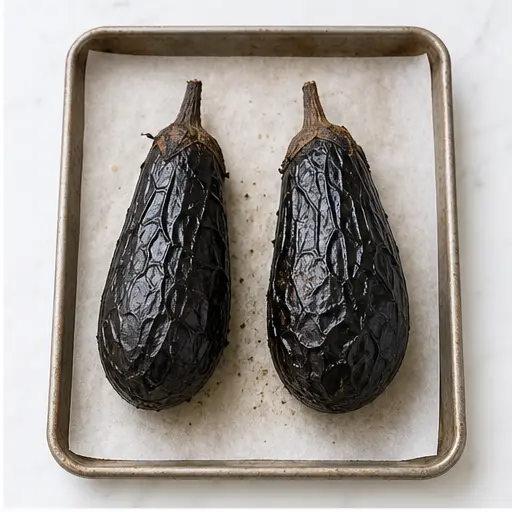
Step 1: Roast the whole eggplants. Preheat your oven to 350°F. Line a baking sheet with parchment paper or foil. Place the whole eggplants on the sheet don’t cut them, don’t poke them, just put them on there whole. Roast them for 60 minutes. Yes, a full hour. I know that seems like a long time, but trust me. The eggplants need that time to break down completely on the inside. The skin will look wrinkled and collapsed, and the flesh should be incredibly soft when you poke it. If it still feels firm, give it another 10-15 minutes.
Why whole? When you roast the eggplant whole, it steams from the inside. The moisture gets trapped inside the skin, and that gentle steam creates that silky, almost custard-like texture. If you cut the eggplant first, the flesh dries out and you lose that creaminess.
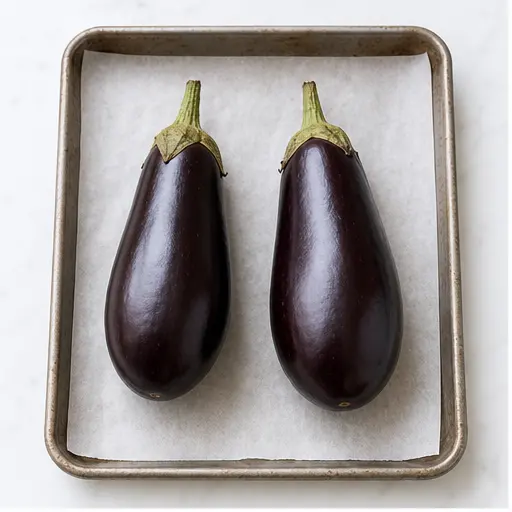
Step 2: Cool and peel. Once the eggplants are done, remove them from the oven and let them cool on the baking sheet for about 30 minutes. They’ll be hot, and the steam inside needs to settle. When they’re cool enough to handle, gently peel off the charred skin. It should come off in big strips, very easily. If it’s sticking, the eggplant might need a few more minutes of roasting.
Step 3: Drain the flesh. This is the trick that separates good melitzanosalata from watery melitzanosalata. Transfer the peeled eggplant flesh to a colander set over a bowl. Let it drain for 30 minutes. I know, more waiting. But look at all that liquid that comes out. If you skip this step, your dip will be thin and sad. The draining concentrates the flavor and gives you that perfect, spreadable texture.
How to Make Melitzanosalata
Now for the fun part. Once your eggplant is drained, you’re ready to put it all together.
Step 4: Blend it up. In a food processor, combine the drained eggplant flesh, the 5 peeled garlic cloves, the breadcrumbs, the olive oil, the red wine vinegar, a pinch of salt, a pinch of pepper, and the chopped parsley. Pulse until smooth and well blended. Don’t over-process it you want it creamy but not completely pureed. A little bit of texture is nice.
Step 5: Taste and adjust. This is where you make it your own. Taste the dip. Does it need more salt? More vinegar? A little more olive oil to make it creamier? Adjust until it tastes perfect to you. I usually end up adding a bit more salt and maybe another splash of vinegar.
Step 6: Serve or chill. You can serve the dip immediately if you want, but I think it’s even better after a few hours in the fridge. The flavors meld together, the garlic mellows, and everything just comes together. Bring it to room temperature before serving for the best flavor.
Expert Tips for Best Results
I’ve made this dip more times than I can count, and I’ve learned a few things along the way. Here are my best tips to make sure your greek roasted eggplant dip melitzanosalata turns out perfect every time.
For Smoky Flavor Without a Grill
Oven broiler method: If you want even more smoky flavor, you can broil the eggplants instead of roasting them. Place them on a baking sheet under the broiler for about 20 minutes, turning them frequently until the skin is blistered and charred all over. The flesh will be just as soft, but the char adds an extra layer of smokiness.
Gas burner method: If you have a gas stove, you can char the eggplants directly over the flame. Use tongs to turn them every few minutes for about 10-15 minutes, until the skin is completely blackened and the flesh feels soft. Then transfer them to a bowl and cover with plastic wrap for 10 minutes to steam, which makes peeling easier.
Texture targets: For a smoother dip, use the food processor but don’t overdo it. For a chunkier dip, skip the food processor entirely and mash everything with a fork after finely chopping the garlic by hand. I’ve done both, and I honestly can’t pick a favorite. The chunky version has more personality, but the smooth version feels more elegant for parties.
Avoiding bitterness: Modern eggplants are bred to be much less bitter than the ones our grandparents cooked with. But if you’re worried, you can salt the cut eggplant before roasting. Since we’re roasting them whole in this recipe, that’s not an option. But honestly, I’ve never had a problem with bitterness using good, fresh eggplants. If you do get a bitter one, a little extra salt and vinegar in the finished dip usually balances it out.
Common mistakes to avoid:
- ❌ Not draining the eggplant well → ✅ Let it drain in a colander for at least 30 minutes. Squeeze it gently if you’re in a hurry.
- ❌ Using too much garlic → ✅ Start with 3-4 cloves if you’re sensitive. Raw garlic gets stronger as it sits.
- ❌ Over-processing in the food processor → ✅ Pulse until just combined. A few seconds too long and you’ll have a watery mess.
- ❌ Not roasting the eggplants enough → ✅ The skin should be completely collapsed and the flesh should feel like a soft pillow when you poke it.
Variations to Try
This authentic Greek eggplant spread is perfect as written, but sometimes it’s fun to mix things up. Here are a few variations I’ve tried and loved.
- Add roasted red pepper: Fold in a small chargrilled red pepper after blending. It adds sweetness and a beautiful color. This is a common variation in Greek tavernas.
- Use lemon juice instead of vinegar: Swap the red wine vinegar for fresh lemon juice. It gives the dip a brighter, more citrusy flavor. I do this when I’m serving it with grilled fish or seafood.
- Add some heat: If you like a little kick, add a pinch of red pepper flakes or a small chopped chili pepper. It’s not traditional, but it’s delicious.
- Top with olives: Serve the dip with a few oil-cured olives on top. The salty, briny flavor of the olives is a perfect contrast to the creamy, smoky dip. It’s a classic oil cured olives pairing.
- Herb swap: If you don’t have fresh parsley, you can use fresh mint or dill instead. Both work beautifully with eggplant.
How to Serve Melitzanosalata
This dip is incredibly versatile. Here are some of my favorite ways to serve it.
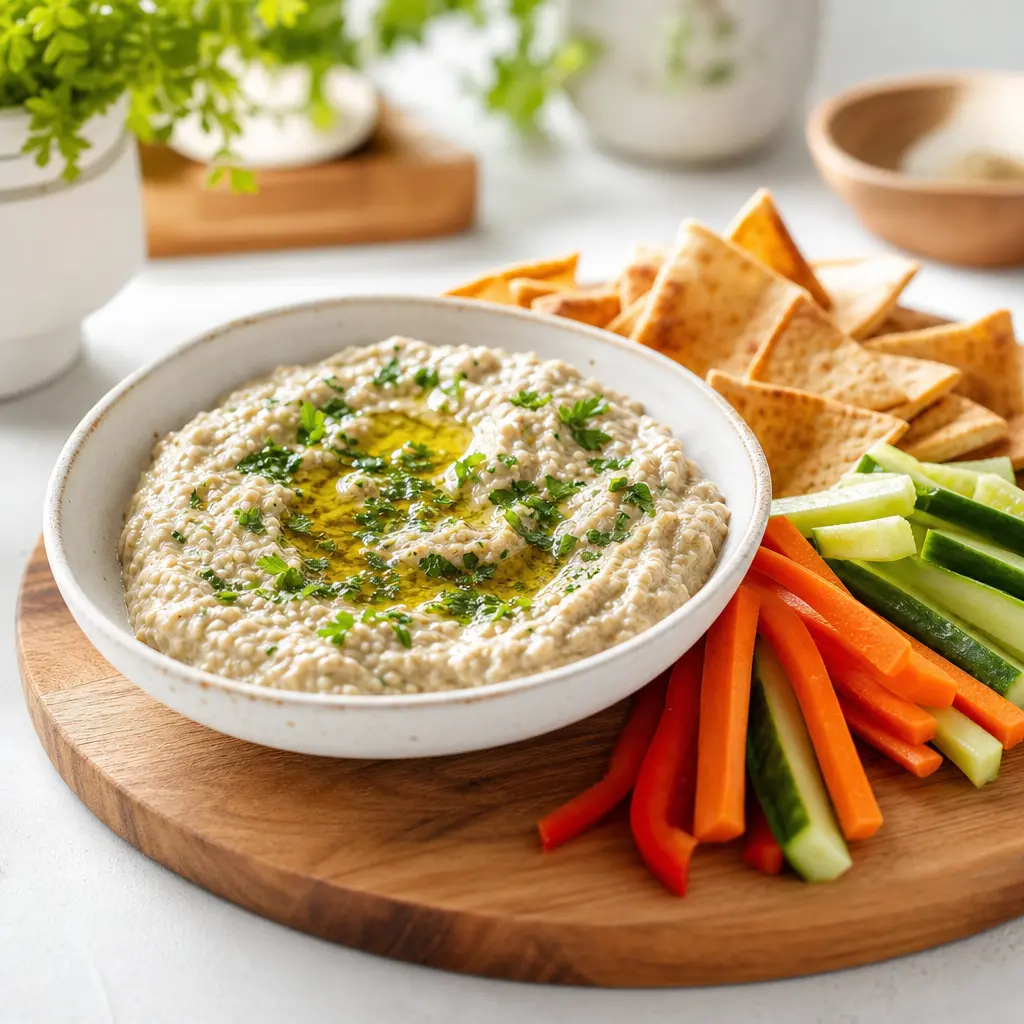
- With warm pita or crusty bread: The classic way. Toast some pita bread, cut it into triangles, and scoop up that smoky goodness. It’s also amazing with pita chips with dip for a crunchy contrast.
- With fresh vegetables: For a lighter option, serve it with crunchy vegetable sticks like carrots, celery, cucumber, and bell peppers. It’s a healthy Greek dip that works perfectly as a snack or appetizer.
- As part of a mezze platter: This is my favorite way to serve it. Arrange the melitzanosalata on a large platter with other Mediterranean dip ideas like hummus, tzatziki, and baba ganoush. Add some olives, feta cheese, cherry tomatoes, and warm bread. It’s a feast that looks impressive with almost no effort.
- As a spread for sandwiches or wraps: Use it instead of mayo or hummus on a veggie sandwich or wrap. It adds so much flavor.
- Alongside grilled meats or fish: It’s a fantastic side dish for grilled lamb chops, chicken skewers, or a piece of simply grilled fish. The smoky, creamy dip is a perfect counterpoint to the charred meat.
How to Store Leftovers
One of the best things about this dip is how well it stores. In fact, I often make it a day ahead on purpose.
Store the melitzanosalata in an airtight container in the refrigerator. It will keep for up to 3 days. Before serving, bring it to room temperature the flavors are much more pronounced when it’s not ice cold. Give it a good stir, and maybe add a fresh drizzle of olive oil on top.
Can you freeze it? I don’t recommend it. The texture changes when you freeze and thaw it it becomes watery and grainy. This dip is best enjoyed fresh or within a few days of making it. If you have a lot left over, consider using it as a pasta sauce or a spread for sandwiches instead of freezing it.
Reheating: You don’t need to reheat this dip. It’s meant to be served at room temperature or slightly chilled. If you do want to warm it up slightly, let it sit on the counter for 30 minutes before serving. Don’t microwave it that will ruin the texture.
Frequently Asked Questions
I hope you love this greek roasted eggplant dip melitzanosalata as much as I do. It’s one of those recipes that feels special but is actually so simple to make. The smoky aroma that fills your kitchen while the eggplants roast, the way the flesh turns golden and translucent, that first bite when all the flavors come together it’s pure magic.
Make this for your next gathering and tell me how it goes! I’d love to hear about your experience. And if you’re looking for more eggplant recipes summer ideas, stick around I’ve got plenty more where this came from.
Source: Nutritional Information